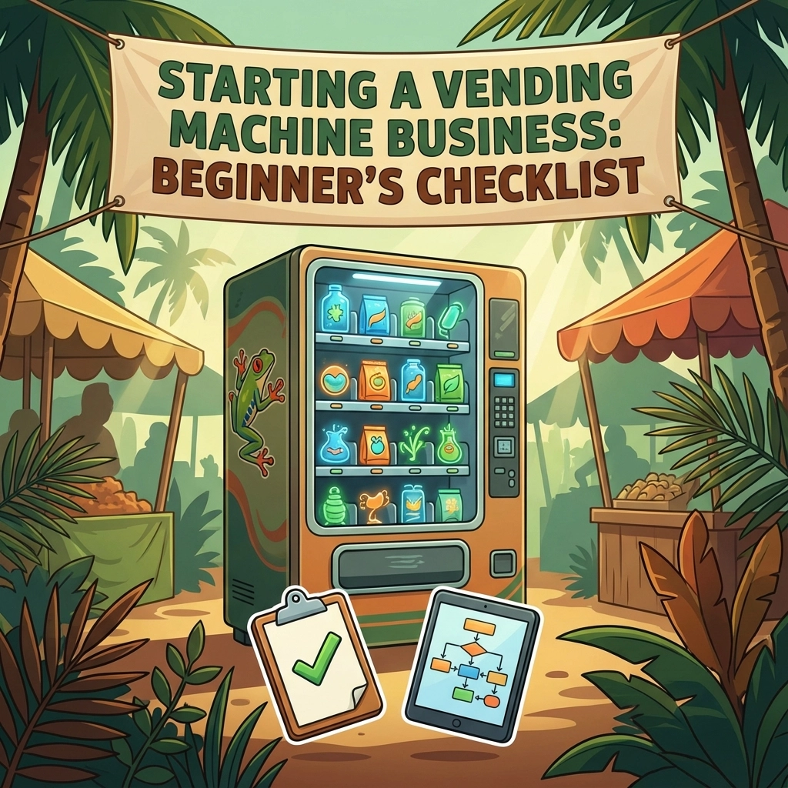
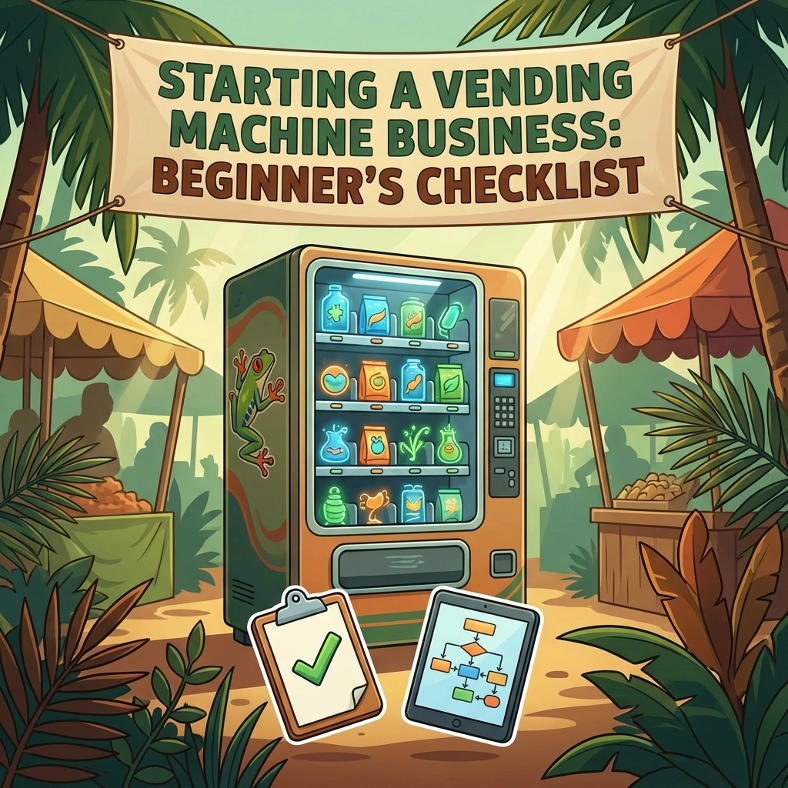
Starting a Vending Machine Business: Beginner's Checklist
So you've caught the vending bug? Welcome to the club!
Maybe you've been staring at that office snack machine thinking, "I could do this better," or perhaps you're dreaming of passive income while sipping coffee at 2 PM on a Tuesday. Either way, you're in the right place.
Here's the thing though, there's a huge difference between owning vending machines and running a successful vending business. One makes you a person with expensive metal boxes, the other makes you a legitimate entrepreneur. The secret sauce? A solid plan and understanding what we call the "four keys" to vending success. Let's dive into your complete beginner's roadmap!
Step 1: Create Your Business Foundation (Yes, You Need a Real Plan!)
Before you get starry-eyed about profit projections, let's talk strategy. A proper business plan isn't just paperwork: it's your GPS for navigating this industry.
Your plan should cover:
Clear goals: Are you aiming for side income or building an empire?
Target market: Office buildings? Gyms? Schools? Each requires different approaches
Financial projections: Realistic numbers, not wishful thinking
Product strategy: What you'll sell and why
Supplier relationships: Where you'll source inventory consistently
Think of your business plan as the difference between throwing darts blindfolded versus having a laser sight. Both might hit the target, but one's a lot more reliable!
Step 2: Master the Four Keys to Vending Success
At Pura Vida Air, we've learned there are four non-negotiables that separate thriving operators from those who struggle:
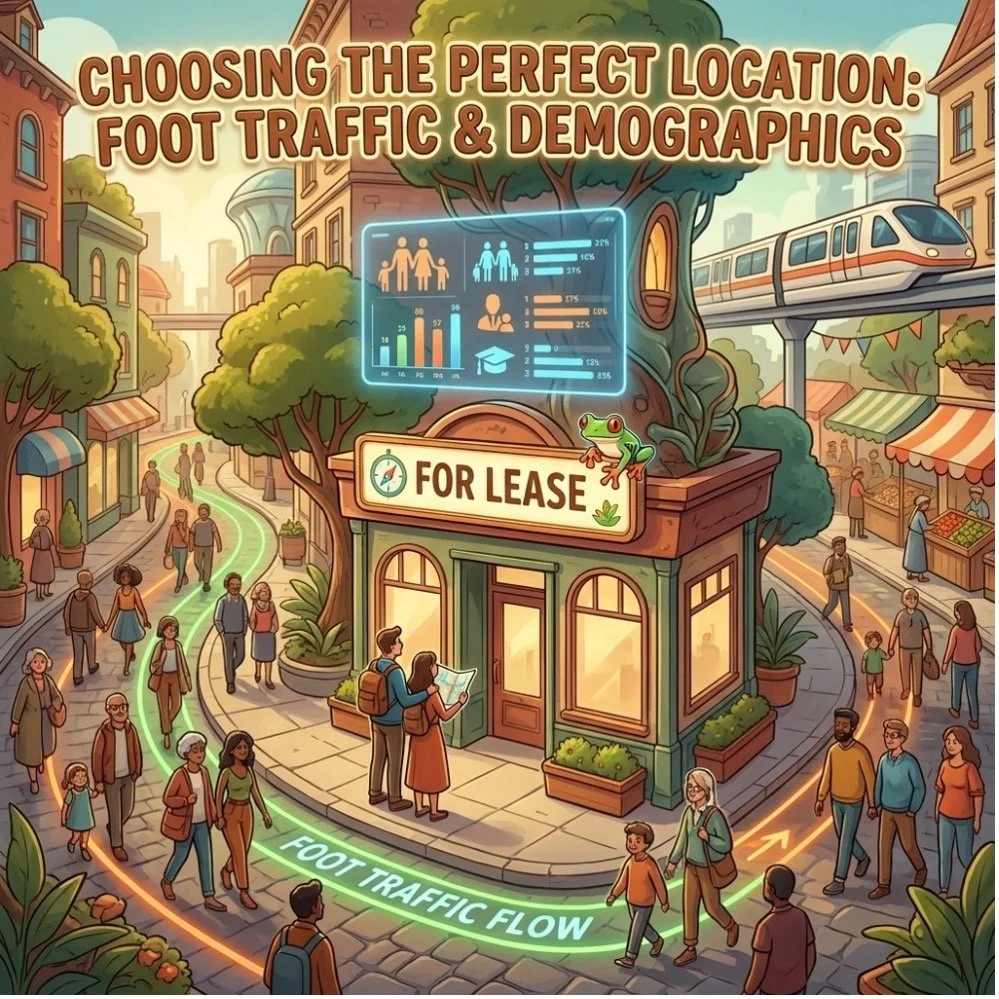
Key #1: Location (The Golden Rule)
Your machine could dispense hundred-dollar bills, but if nobody walks by, you're still broke. Location trumps everything else: product selection, pricing, even machine quality.
What makes a location golden:
High foot traffic throughout the day
Limited competition nearby
Target customers who actually buy vending products
Easy access for restocking
Pro tip: Secure your location before buying equipment. A shiny machine in your garage earns exactly zero dollars.
Key #2: Machine Quality
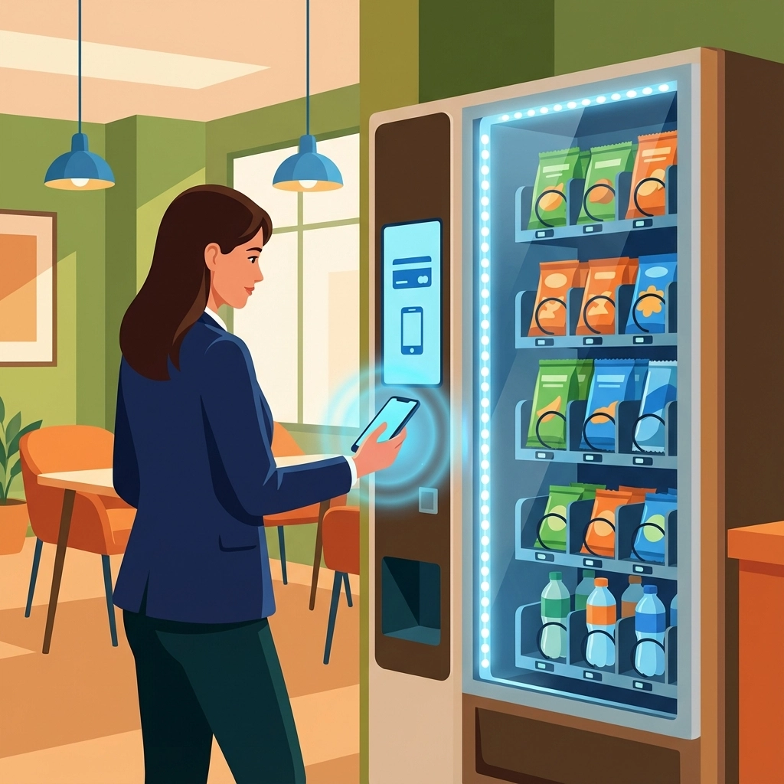
Modern customers expect modern conveniences. That means cashless payments aren't optional anymore, they're essential. Over 71% of vending purchases are now cashless, so a cash-only machine is basically a really expensive paperweight.
Must-have features:
Credit/debit card readers
Mobile payment capability (Apple Pay, Google Pay)
LED lighting for visibility
Reliable drop mechanisms
Remote monitoring capabilities
Key #3: Service Excellence
Nothing kills customer confidence like a machine that eats their money or gets stuck dispensing last month's expired sandwiches. Consistent, reliable service builds loyalty and repeat business.
Service essentials:
Regular restocking schedules
Quick response to maintenance issues
Fresh inventory rotation
Clean, well-lit machine appearance
Key #4: Smart Pricing
Price too high and you'll watch potential customers walk away. Price too low and you'll work for pennies. Find that sweet spot where customers feel they're getting fair value while you maintain healthy margins.
Step 3: Handle the Legal Stuff (It's Easier Than You Think!)
Don't let the legal requirements scare you, they're straightforward once you know what you need.
Business Structure Options:
LLC: Best for liability protection and tax flexibility
Sole Proprietorship: Simpler but offers less protection
Required Permits & Licenses:
Business license from your city/county
Sales tax permit
Food handling permit (for food/beverage machines)
Vending permit (required in some states)
Costs typically range from $10 to a few hundred dollars depending on your location. Once registered, open a business bank account to keep everything professional and organized.
Step 4: Budget Like a Pro
Let's talk real numbers. Starting a vending business requires both upfront investment and ongoing operational funds.
One-Time Startup Costs:
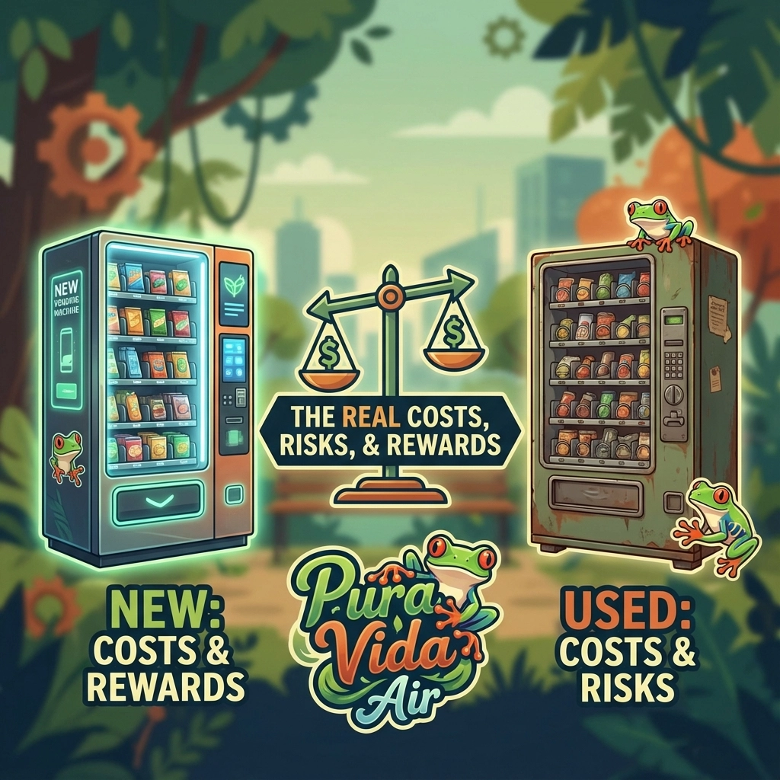
New vending machine: $3,000-$8,000
Used machine: $1,500-$4,000
Initial inventory: $200-$500
Payment system upgrades: $500-$1,500
Basic tools and supplies: $200-$500
Monthly Operating Expenses:
Inventory replenishment
Location fees (if applicable)
Insurance premiums
Vehicle costs for restocking
Maintenance and repairs
Smart budgeting tip: Start with one machine in a proven location rather than spreading yourself thin across multiple questionable spots.
Step 5: Choose Your Equipment Wisely
Not all vending machines are created equal. Your machine is your silent salesperson, working 24/7 to generate revenue.
Essential features for 2025:
Cashless payments: Non-negotiable in today's market
Remote monitoring: Know what's selling without driving to check
Energy efficiency: Lower operating costs
Reliable mechanics: Fewer service calls mean higher profits
Consider starting with a quality used machine to test your market before investing in brand-new equipment. Just ensure it has modern payment capabilities!
Step 6: Perfect Your Product Strategy
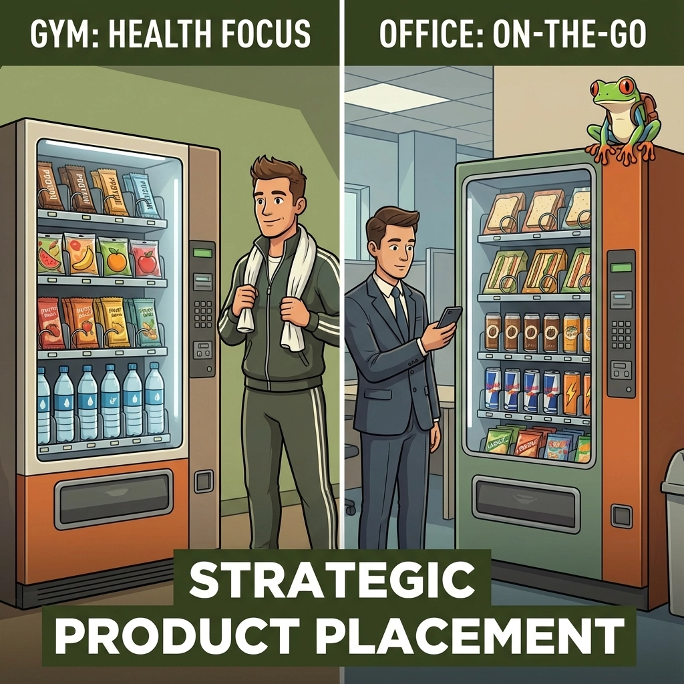
Your product mix can make or break your success. Match your inventory to your location's specific needs:
Office buildings: Focus on grab-and-go meals, coffee, energy drinks
Gyms: Protein bars, sports drinks, healthy snacks
Schools: Kid-friendly snacks, juice boxes, affordable treats
Hospitals: 24-hour options, coffee, comfort foods
Start conservative with your initial stock. It's better to sell out occasionally than to watch products expire on the shelf.
Step 7: Launch and Monitor Like a Hawk
Once everything's in place, it's go time! But launching isn't the finish line: it's when the real work begins.
First 30 Days Action Plan:
Check inventory levels at least twice weekly
Monitor which products sell fastest
Track payment method preferences
Document any mechanical issues
Gather customer feedback when possible
Use data to drive decisions: If energy drinks fly off the shelves but granola bars collect dust, adjust your mix accordingly. Your machine will tell you exactly what customers want if you pay attention.
Step 8: Protect Your Investment
Insurance might seem boring, but it's your safety net against the unexpected.
Essential coverage:
Equipment insurance: Protects against theft, vandalism, weather damage
General liability: Covers potential customer injury claims
Product liability: Protects against food-related issues
Most policies cost $500-$1,500 annually: a small price for peace of mind.
Your Path to Vending Success Starts Now
Starting a vending machine business doesn't have to be overwhelming. With proper planning, the right equipment, prime locations, and consistent service, you're setting yourself up for genuine success : not just machine ownership.
Remember the four keys: location, machine quality, service, and pricing. Master these fundamentals, and you'll be amazed how quickly your "side hustle" can grow into something substantial.
The vending industry isn't going anywhere. People will always need convenient access to snacks, drinks, and quick meals. The question is: will you be the one providing it?
Ready to turn your vending dreams into reality? The checklist above gives you everything you need to start strong. Now stop planning and start doing. Your future customers are waiting!
Want to learn more about building a successful vending operation? Check out our other resources at Pura Vida Air and discover how we help entrepreneurs like you thrive in the vending industry.