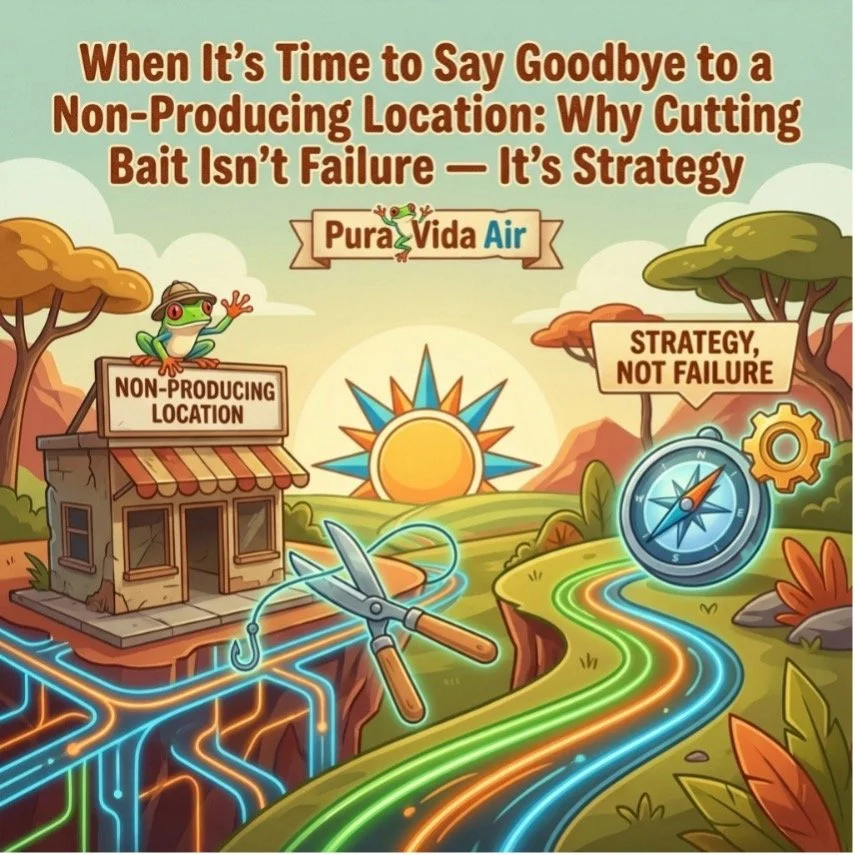
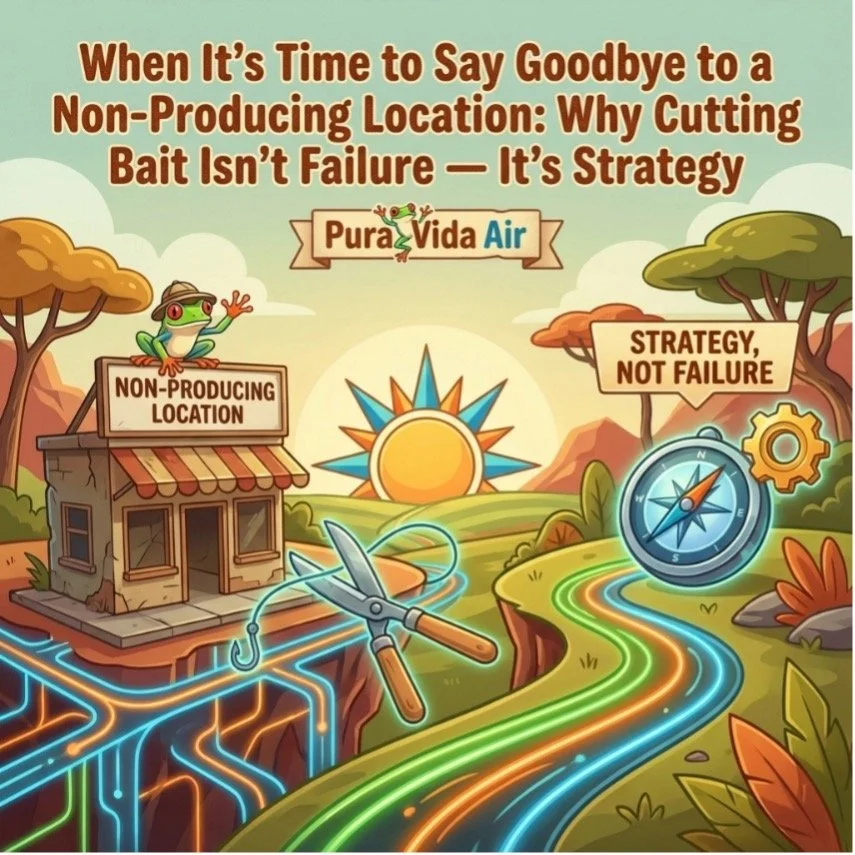
When It's Time to Say Goodbye to a Non-Producing Location: Why Cutting Bait Isn't Failure , It's Strategy.
Every vending owner remembers their first location, the one full of big promises, glowing projections, and dreams of a thriving route.
For us at Pura Vida Air, that inaugural site was supposed to be the launchpad to wealth and fame: 300 people a day, round-the-clock traffic, blue-collar customers who would appreciate convenient, fairly priced snacks. That was the pitch.
Reality?
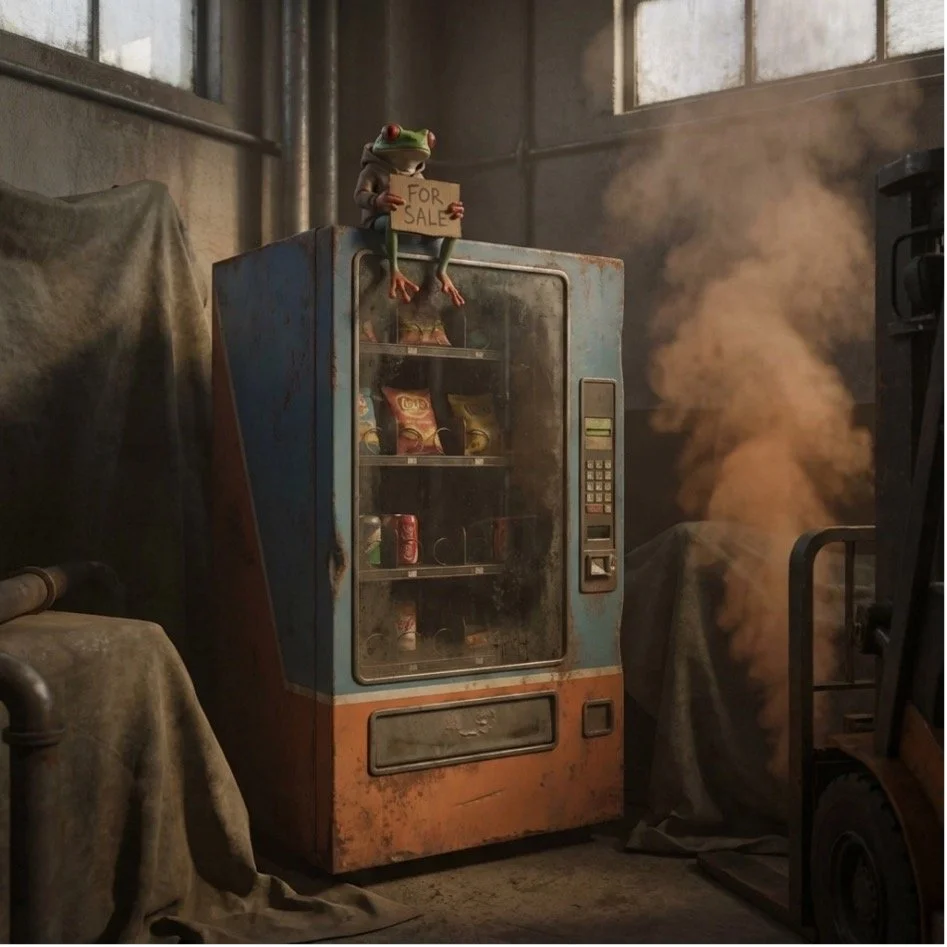
A hard-to-reach corner in a diesel-fume-filled warehouse, no AC, and foot traffic so low it might as well have been abandoned. Our "300 visitors per day" turned out to be closer to three, and even those were employees passing through in a sweat-drenching hurry.
We Did Everything Right, Then Everything Extra
Listen, we weren't going down without a fight. We threw the entire playbook at this location:
Priced products at blue-collar levels with razor-thin margins
Rotated stock religiously, tried new SKUs, and pulled underperforming items
Lost chocolate to the Florida heat because the warehouse was as hot as a kiln
Watched items expire simply because no one moved through the area
And yes, we even taped $5 bills to random snacks to entice people to just interact with the machine.
If you ever find yourself bribing customers with cash to get any traction, the market has spoken.
Eventually, the writing on the wall became impossible to ignore: It was time to say goodbye.
And that decision, not the install, not the struggle, not the loss, was actually the win.
Why Walking Away Matters More Than Holding On
1. Emotion Isn't Strategy
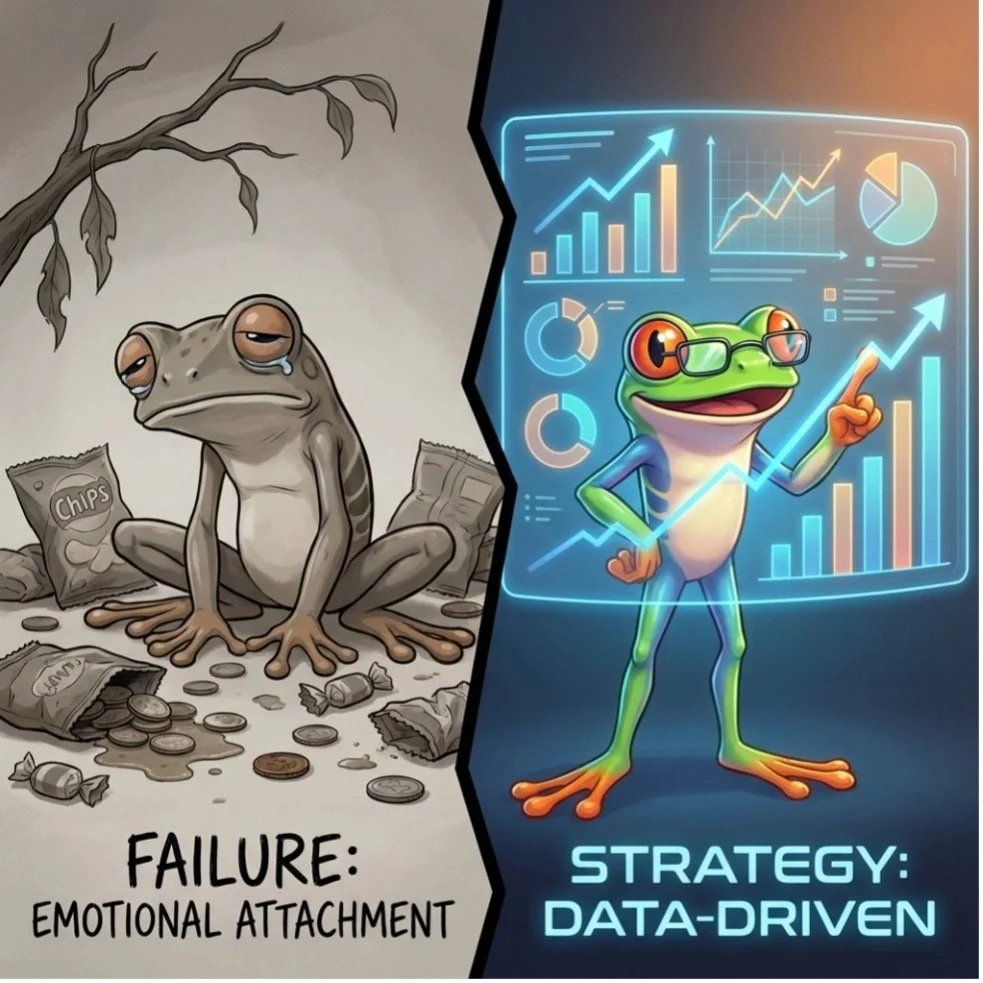
We all get sentimental about our first location. It's a badge of honor, a story you tell, the place where you "started." But nostalgia won't pay for expired drinks, melted chocolate, or endless site visits just to watch people not walk by.
A site doesn't deserve to stay on your route simply because it came first.
A vending business lives or dies by numbers , not memories.
2. After Mitigation, You Must Be Honest With the Data
Running promotions, switching products, refreshing pricing, those are smart, professional strategies. But once you've exhausted your toolkit and the data still looks like a flatline EKG, you're staring at a location problem, not a vending problem.
You can fix pricing ✅
You can fix product mix ✅
You cannot fix zero foot traffic ❌
3. "Hope" Is Not a Business Model
Many operators cling to bad locations because "traffic might pick up" or "new hires are coming" or "leadership swears things will change." But a machine doesn't get paid in hope, it gets paid in transactions.
If the numbers don't move after months of effort, they won't.
4. Underperformers Drain Time, Money, and Mental Bandwidth
A failing site doesn't just lose direct revenue, it steals capacity:
Extra service calls (because somehow broken locations break more often)
Extra spoilage (heat + low turnover = inventory graveyard)
Extra emotional energy (the constant "maybe this week will be different")
Extra second-guessing (analyzing data that won't improve)
Less time available to scout new, profitable locations
The opportunity cost is real. Every week you hang on to a dead site is a week you delay finding the profitable one waiting around the corner.
5. Cutting a Non-Producer Is a Sign of Maturity
Real operators understand something beginners often don't: Your route is only as strong as its worst location.
When you tighten your standards, your whole business strengthens. When you remove unproductive assets, your cash flow opens. When you learn to walk away early, you accelerate growth.
Letting go isn't quitting, it's professionalizing.
The Hard Truth: Not Every Location Deserves a Machine
We say this a lot, because it's true: Not every building, business, or breakroom is suitable for a vending solution.
Some sites look great on paper but implode in practice. Some appear promising until you see where they actually want the machine placed. Others reveal quickly that the customer base just isn't interested, no matter how aggressively priced or well-stocked the machine is.
And that's okay. A vending business doesn't need every site, it needs the right ones.
So When Should You Cut a Location Loose?
Here's the rule we follow now at Pura Vida Air:
If a site repeatedly underperforms for 60–90 days after applying all reasonable mitigation strategies, it's time to say thank you, pack up, and move on.
No drama 🎭
No guilt 😔
No emotional attachment 💔
Just good business 💼
Think about it: if you can't turn a location around in three months of focused effort, what makes you think month four will be different? Or month six? The definition of insanity is doing the same thing over and over while expecting different results.
(And before you ask, yes, there are exceptions for seasonal businesses, major renovations, or temporary disruptions. But those are genuine temporary factors, not indefinite "someday maybe" scenarios.)
The Real Cost of Hanging On Too Long
Let's get brutally honest about what keeping a dead location costs you:
Financial Impact:
Lost revenue from better locations you could have pursued
Ongoing product spoilage and waste
Transportation costs for minimal returns
Time investment that yields zero ROI
Operational Impact:
Reduced focus on high-performing sites
Inventory allocation inefficiencies
Route optimization nightmares
Team morale issues (nobody likes servicing losing locations)
Strategic Impact:
Slower business growth overall
Reduced learning velocity (bad data teaches bad lessons)
Weakened negotiating position with future clients
Diluted brand perception in the market
Final Thought: Saying Goodbye Creates Space for Better Sites
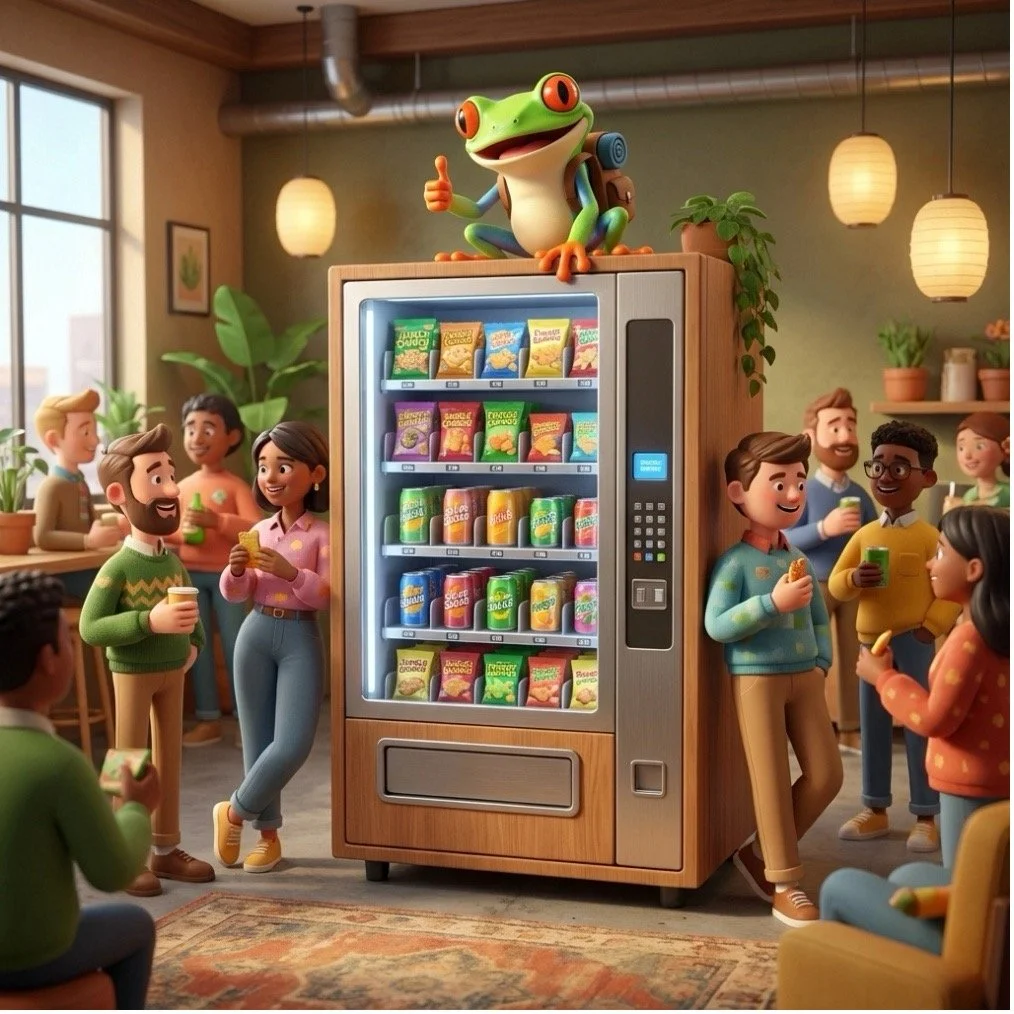
Leaving our first location was bittersweet: but it was also the turning point. It freed our schedule, improved our inventory rotation, and opened the door for better-positioned sites with real traffic and real customers.
Within 30 days of pulling that machine, we landed two locations that each generated more revenue in their first week than our original site managed in three months. That's the power of strategic focus.
A vending empire isn't built by clinging to the wrong places.
It's built by learning, adjusting, moving with speed and velocity, and knowing when it's time to move on.
Sometimes "goodbye" is the smartest growth strategy you have.
Ready to build a vending route that actually works? At Pura Vida Air, we help businesses discover the locations that matter: not just the ones that look good on paper. Let's find your next winning site.